




Lab Roller Mills: The Fabrication of Materials
Laboratory roller mills are essential tools in the laboratory setting, used for the production of materials such as polymers, ceramics, and composites. These machines are designed to process a wide range of materials under controlled conditions, allowing researchers to produce consistent and repeatable results. In this article, we will explore the different types of laboratory roller mills, their applications, and how to operate them effectively.
Firstly, there are two main types of laboratory roller mills: horizontal and vertical. Horizontal roller mills are more commonly used in laboratories due to their simplicity and ease of use. They consist of a rotating drum that is surrounded by rollers, which apply pressure to the material being processed. The drum rotates at high speeds, causing the rollers to roll over the material and crush it into smaller particles. This process is known as "rolling" or "milling."
Vertical roller mills, on the other hand, are more complex and require more maintenance. They have a vertical axis and are typically used for larger-scale production. The material is fed into the top of the mill, where it is crushed by rollers that rotate at lower speeds. The resulting product is then discharged from the bottom of the mill.
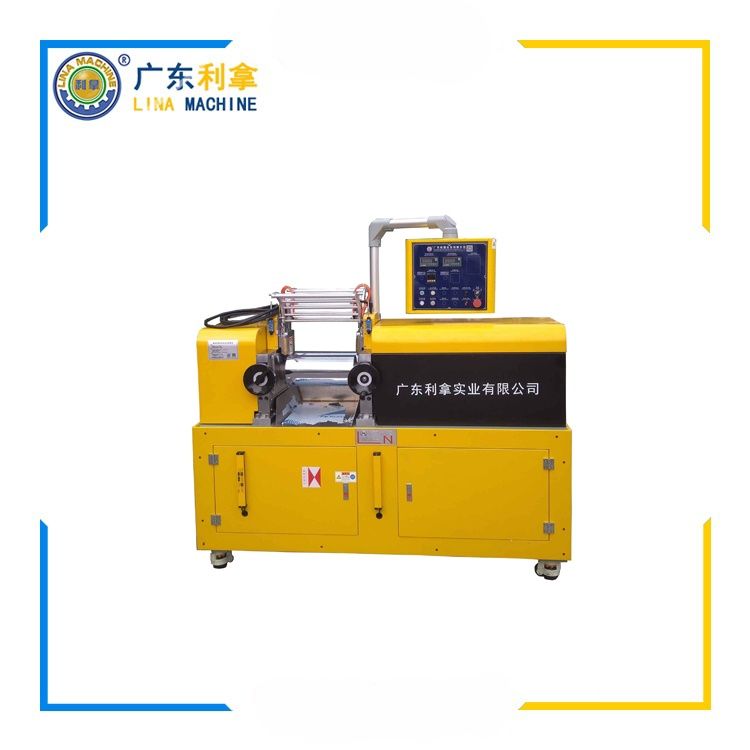
Both types of roller mills can be operated manually or with automation. Manual operation involves manually feeding the material into the mill and monitoring the process. Automation involves using a computer system to control the speed and pressure of the rollers, as well as the amount of material being processed.
In addition to their mechanical properties, roller mills are also important for their ability to handle a wide range of materials. Some common materials processed by roller mills include polymers, ceramics, and composites. Polymers are processed by grinding the material to a fine powder, while ceramics and composites are processed by crushing the material into smaller particles.
To operate a laboratory roller mill effectively, it is important to understand the basic principles of milling and to follow proper safety procedures. For example, it is important to wear protective gear when operating a roller mill, such as gloves and goggles. Additionally, it is important to monitor the temperature and pressure of the rollers during the process to prevent damage to the equipment.
In conclusion, laboratory roller mills are essential tools for the fabrication of materials in the laboratory setting. By understanding the different types of roller mills and their applications, as well as following proper safety procedures, researchers can produce consistent and repeatable results in their experiments.