
The Art of Particle Formation in Ceramic Powder Making Machines
Ceramic powder making machines are essential tools in the production process of ceramic materials. They play a crucial role in transforming raw materials into fine, uniformly sized particles that can be easily molded and fired to produce high-quality ceramic products. In this article, we will explore the various types of ceramic powder making machines, their applications, and how they contribute to the success of ceramic manufacturing.
Firstly, there are two main types of ceramic powder making machines: ball mills and rod mills. Ball mills are commonly used for grinding raw materials into small particles, while rod mills are more suited for producing larger particles. Both types of machines use different grinding techniques to achieve the desired particle size distribution.
Ball mills consist of a rotating cylinder filled with grinding media, such as steel balls or ceramic balls. The cylinder is surrounded by a stationary cylinder, which rotates at a low speed. As the cylinders rotate, the grinding media come into contact with each other and the raw material, causing them to grind and mix together. This process results in a uniformly sized particle size distribution, which is critical for the quality of the final product.
Rod mills, on the other hand, use a rotating rod to crush and grind the raw material. The rod is surrounded by a stationary cylinder that rotates at a higher speed. The rod breaks up the raw material into smaller pieces, which are then ground and mixed together by the grinding media. Rod mills are suitable for producing large particles, which are important for some ceramic applications.
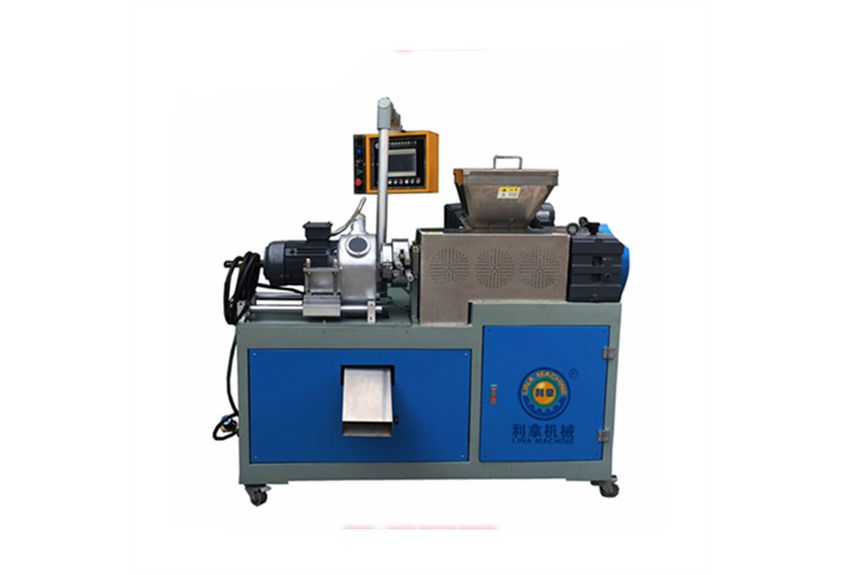
The choice between ball mills and rod mills depends on the specific requirements of the ceramic manufacturing process. For example, if the goal is to produce finer particles, a ball mill may be more appropriate. Conversely, if larger particles are needed, a rod mill may be more effective.
In addition to these basic types of ceramic powder making machines, there are also specialized machines designed for specific applications. For example, a vibrating screen machine is used to separate the fine particles from the larger ones, while a cyclone machine is used to remove dust and other impurities from the air. These specialized machines help to improve the overall quality of the ceramic product and ensure compliance with environmental regulations.
In conclusion, ceramic powder making machines play a vital role in the production process of ceramic materials. By understanding the different types of machines available and their respective applications, manufacturers can optimize their production processes and achieve the highest quality products. With the right equipment, ceramic manufacturing can become an efficient and cost-effective endeavor.