



The Integration of Polymer and Plastic Compounding in Granulation Production Lines
The production line for granulating polymer and plastic compounds is a crucial step in the manufacturing process of various products. This article will explore the integration of polymer and plastic compounding in granulation production lines, highlighting the importance of this technology in modern industrial settings.
Firstly, it is essential to understand that granulation is a critical process in the manufacturing industry. It involves the formation of small particles or beads from larger raw materials. These particles are then used as fillers or reinforcements in various products, such as plastics, rubber, and composites.
In the context of polymer and plastic compounding, granulation plays a vital role in the production of these materials. By combining different polymers and plastics, manufacturers can create unique properties and functionalities that are not possible with individual components. This integration allows for the creation of materials with superior mechanical strength, flexibility, and durability.
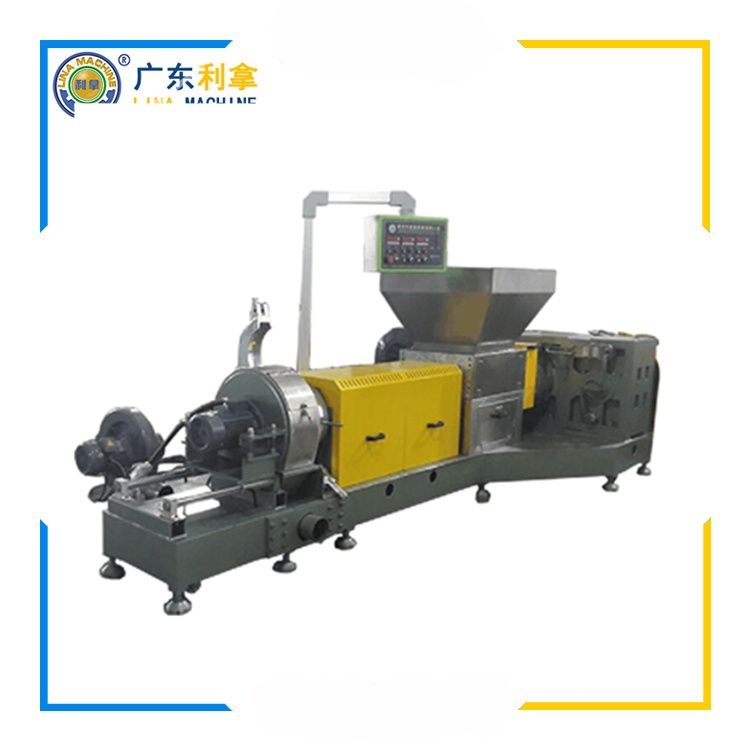
One example of this integration is found in the production of thermoplastic elastomers (TPEs). TPEs are a type of thermoplastic material that combines the properties of both plastics and rubber. They offer excellent flexibility, wear resistance, and impact resistance, making them ideal for applications in automotive, footwear, and other industries.
To achieve this integration, granulation production lines use specialized equipment that combines polymer and plastic compounds into small beads or pellets. These beads are then dried and molded into desired shapes, which are then processed further to produce finished products.
The benefits of integrating polymer and plastic compounding in granulation production lines are numerous. Firstly, it allows for the creation of materials with unique properties that cannot be achieved through traditional methods. Secondly, it reduces waste and improves efficiency by minimizing the amount of raw materials required for each product. Finally, it enables manufacturers to produce high-quality products at lower costs, which can ultimately lead to increased profitability.
In conclusion, the integration of polymer and plastic compounding in granulation production lines is a crucial aspect of modern industrial manufacturing. By leveraging this technology, manufacturers can create materials with superior properties and functionalities, leading to improved product quality, reduced waste, and increased efficiency.