



The Double Roll Mill: A Detailed Guide to Its Function and Applications
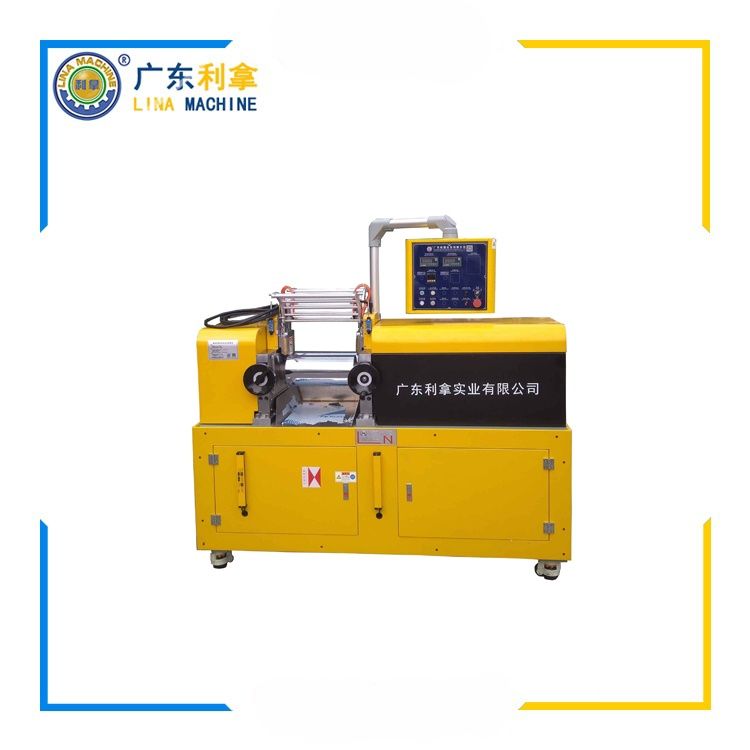
The double roll mill is a crucial piece of machinery in the rubber industry, used for mixing, kneading, and extruding synthetic rubber compounds. This machine is essential for producing high-quality rubber products such as tires, hoses, and gloves. In this article, we will delve into the working principles of a double roll mill, its components, and how it can be used to produce various types of rubber products.
Working Principles:
A double roll mill consists of two parallel rollers that rotate around a central shaft. The outer roller is fixed, while the inner roller moves up and down along the axis. As the inner roller moves up, it pushes the rubber compound against the outer roller, causing it to mix and knead the ingredients together. When the inner roller moves down, it pulls the mixture out of the gap between the rollers, forming a sheet or sheetlets of rubber. This process is repeated until the desired consistency is achieved.
Components:
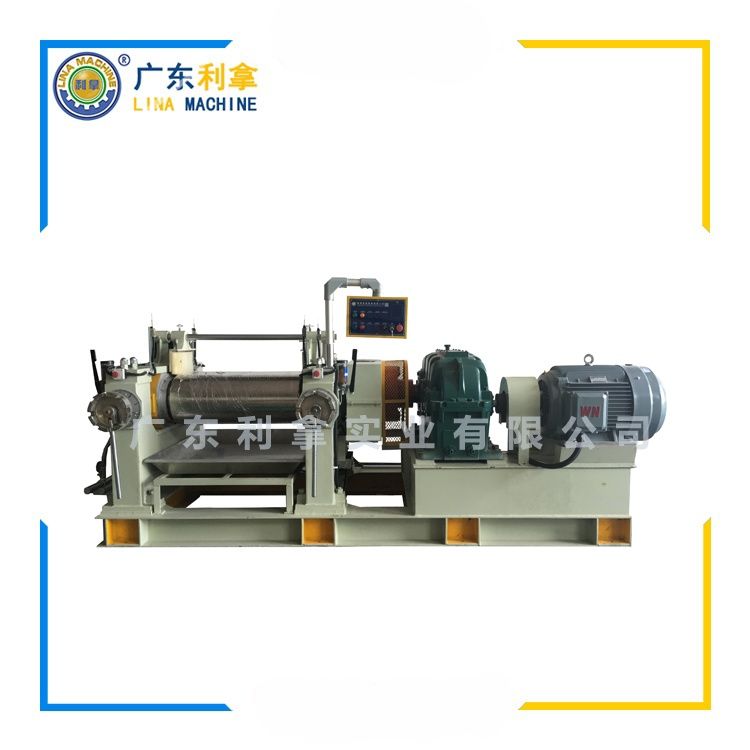
A typical double roll mill consists of the following main parts:
1. Outer roller: The stationary component that presses the rubber compound against the inner roller. It is usually made of steel or stainless steel and has a smooth surface to minimize friction and wear.
2. Inner roller: The moving component that pushes the rubber compound through the gap between the outer roller. It is also made of steel or stainless steel and has a flat surface to ensure even pressure on the compound.
3. Central shaft: The rotating axis that supports the outer and inner rollers. It is usually made of steel or aluminum alloy and is designed to withstand high temperatures and pressures.
4. Motor: The power source that drives the central shaft, which in turn rotates the outer and inner rollers. The motor is usually located outside the mill and connected to the electrical system.
5. Gearbox: A gearbox is used to reduce the speed of the motor and increase the torque output, allowing the mill to handle larger batch sizes.
6. Cooling system: To prevent overheating, a cooling system is installed inside the mill to regulate the temperature of the rubber compound during processing.
7. Control panel: A control panel is used to monitor and adjust the operating parameters of the mill, such as speed, temperature, and pressure.
8. Safety features: To ensure operator safety, the mill is equipped with safety features such as emergency stop buttons, warning lights, and protective gear.
Applications:
The double roll mill is widely used in the rubber industry for the following applications:
1. Tire manufacturing: The mill is used to produce tires by mixing natural rubber, carbon black, and other additives to create a homogeneous rubber compound. The resulting tire compound is then extruded into sheets and cut into desired shapes.
2. Hose manufacturing: The mill is used to produce hoses by mixing polyurethane (PU) resin, fillers, and other additives to create a rubber compound. The resulting hose compound is then extruded into sheets and cut into desired lengths.
3. Glove manufacturing: The mill is used to produce gloves by mixing latex (natural rubber) and other additives to create a rubber compound. The resulting glove compound is then extruded into sheets and cut into desired shapes.
4. Other applications: The double roll mill can also be used to produce other rubber products such as belts, seals, and industrial hoses.
1. Double roll mill
2. Rubber industry
3. Mixing and kneading
4. Extruding
5. Tires
6. Hose
7. Gloves
8. Latex
9. Central shaft
10. Motor
11. Gearbox
12. Cooling system
13. Control panel
14. Safety features
15. Applications
The double roll mill is a crucial tool in the rubber industry, used for mixing, kneading, and extruding synthetic rubber compounds to produce high-quality rubber products such as tires, hoses, and gloves. This machine is essential for achieving consistent and uniform results in the production process. With its advanced design and efficient operation, the double roll mill ensures that the rubber compounds are mixed thoroughly and evenly distributed throughout the material, resulting in superior quality products. Whether you're looking to manufacture tires, hoses, or gloves, the double roll mill is an ideal choice for your next project.