




The Double Roll Mill: A Detailed Guide to Its Operation and Applications
The double roll mill, also known as a twin-roll mill or two-roll mill, is a crucial piece of equipment in the rubber and plastic processing industry. It is used for mixing, kneading, and extruding materials such as latex, natural rubber, and synthetic polymers. In this article, we will explore the basic principles of operation, its advantages, and applications of the double roll mill.
1. Basic Principles of Operation:
The double roll mill consists of two rotating rollers that are separated by a gap. The material to be processed is fed into the gap between the rollers, where it is subjected to high shear forces. This process causes the molecules in the material to break down and mix together, resulting in a homogeneous mixture. The rollers then move towards each other, compacting the material and forming a solid mass.
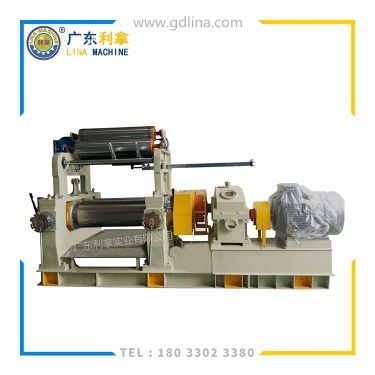
2. Advantages:
One of the main advantages of the double roll mill is its ability to produce a uniform and consistent product. The high shear forces generated during the mixing process ensure that all components are evenly distributed throughout the material. Additionally, the compaction step helps to remove air bubbles and impurities, resulting in a more stable and reliable product.
3. Applications:
The double roll mill is widely used in the rubber and plastic industries for various purposes. Some common applications include:
- Latex production: The mill is used to mix latex with additives such as carbon black, fillers, and stabilizers.
- Natural rubber processing: The mill is used to mix natural rubber with other ingredients to create compound rubber.
- Synthetic polymer processing: The mill is used to mix synthetic polymers with other ingredients to form moldable materials.
- Coatings and adhesives: The mill is used to mix coatings and adhesives with other ingredients to improve their properties.
In conclusion, the double roll mill is an essential tool in the rubber and plastic processing industry for producing uniform and consistent products. Its ability to generate high shear forces and compact the material effectively makes it a preferred choice for many applications.