
Understanding the Forced Feed Extruder
The forced feed extruder is a crucial piece of equipment in the manufacturing industry, particularly in the plastics and rubber sectors. This machine is designed to process materials with high consistency and uniformity, which are essential for various applications such as automotive parts, electronics, and construction products. In this article, we will explore the working principle of the forced feed extruder, its components, and its benefits.
Firstly, let's understand the working principle of the forced feed extruder. The machine consists of several key components, including the hopper, screw, barrel, die, and cooling system. The material enters the hopper through a feeding mechanism, where it is mixed with lubricant and other additives. The mixture then travels down the screw, which rotates at high speeds to mix and knead the material evenly. As the material moves through the barrel, it is further processed by the die, which determines the final shape and size of the product. Finally, the product exits the die and is cooled down before being packaged or sent to the next stage in the production line.
Now, let's discuss the components of the forced feed extruder. The hopper is the first component that receives the raw material and mixes it with lubricant and other additives. The screw is the most important component of the extruder, as it rotates at high speeds to mix and knead the material evenly. The barrel is responsible for shaping the product, while the die determines the final shape and size of the product. The cooling system is used to cool down the product after it exits the die.
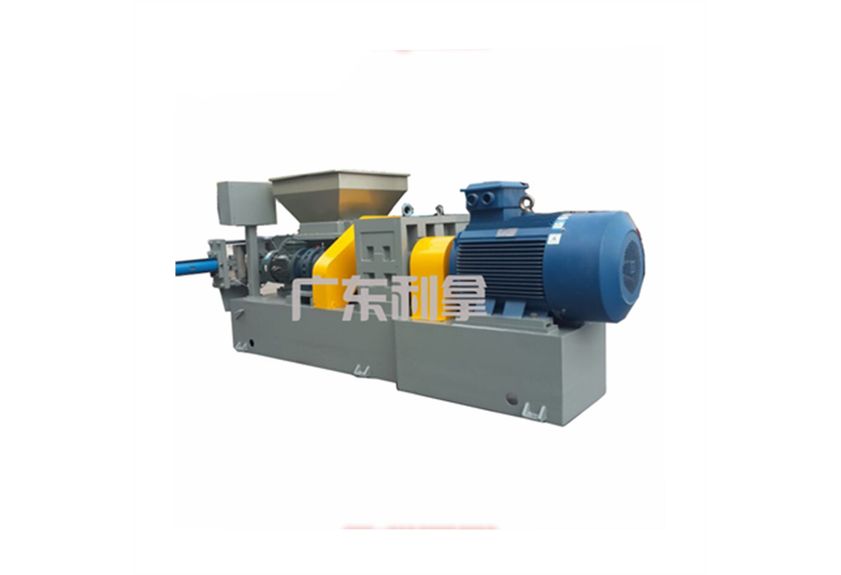
The benefits of using a forced feed extruder are numerous. Firstly, it ensures consistent and uniform material processing, which helps to produce high-quality products. Secondly, it reduces waste and improves efficiency, as it eliminates manual labor and manual handling of materials. Thirdly, it allows for precise control over the processing parameters, such as temperature and pressure, which can be adjusted to meet specific requirements. Finally, it provides flexibility in terms of product design and molding techniques, allowing for the creation of complex shapes and designs.
In conclusion, the forced feed extruder is a vital tool in the manufacturing industry, particularly in the plastics and rubber sectors. Its ability to process materials consistently and uniformly, along with its ability to reduce waste and improve efficiency, makes it an essential piece of equipment for many industries. By understanding the working principle of the forced feed extruder and its components, businesses can optimize their production processes and achieve greater success in the future.
